Week3
Absolute poverty
What is absolute poverty ?
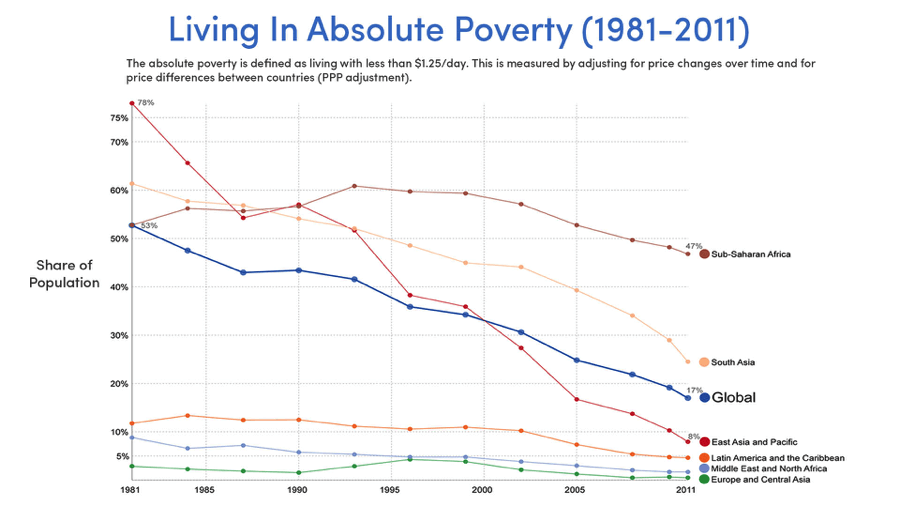
Absolute poverty is the situation where people can't meet basic needs in order to maintain living standard. For instance, having no access to shelter, food, clean water, school education. We have to understand that what we think as a basic level of life may change over time. For example, back in 17 century, food and water were what was all needed to meet basic needs,but in today's society, food should have decent level of nutrients, water should be clean and not polluted. Even the access to the Internet can be minimum requirements to have a normal life. I heard that out of households whose income is less than one half of average ,over 80 percent have Internet access in Japan. (I'll talk about relative poverty in next blog.)
What kinds of assistance we can offer ?
Fights against the poverty
(I couldn’t relate to the situation in Japan, so I’ve decided to look into the case in the world as my local news story)
No poverty is one of the goals of SDGs. United Nations has been tackling the issue under UNDP.
〇Examples
FAO- tries to make advancements in sustainable and comprehensive agricultural environment.They have 2000 ongoing field projects where they protect lands and forests.

Comments
Post a Comment